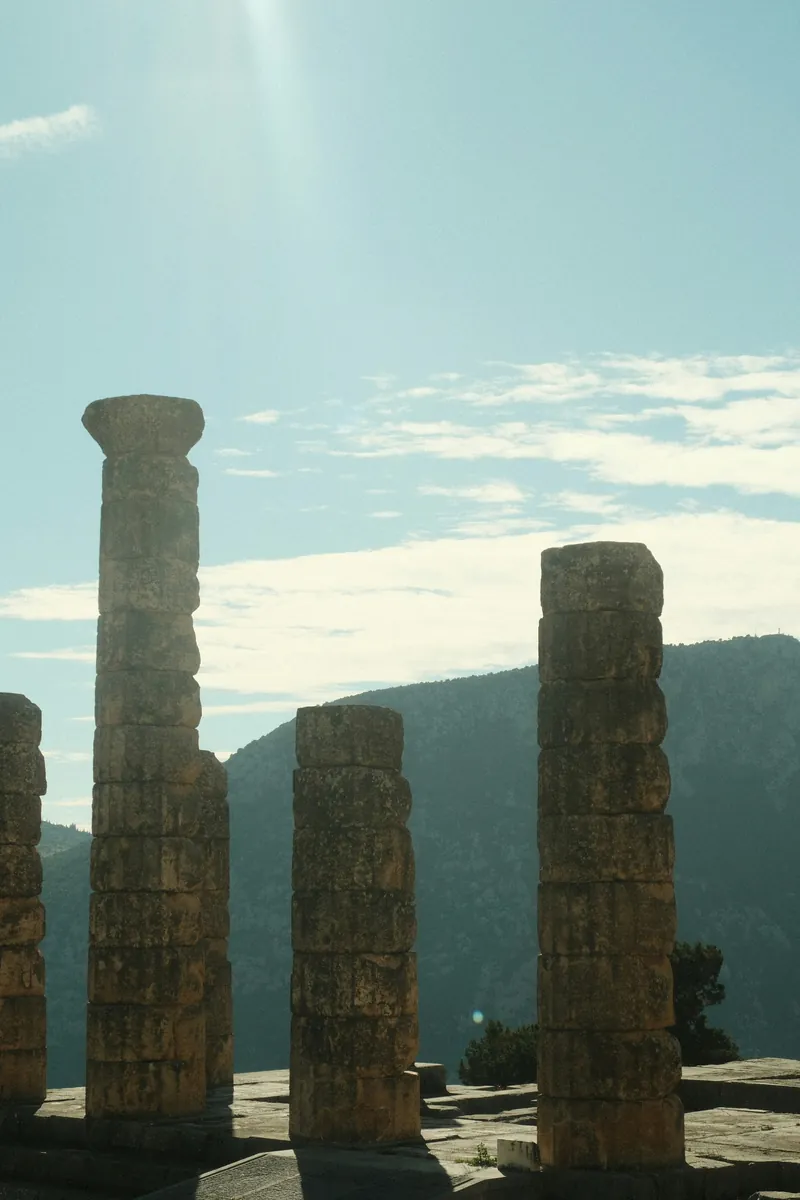
The columns of the Temple of Apollo at Delphi standing against the pine-clad slopes of Mount Parnassus above the valley

Consult the Oracle where the ancient world came to hear its future

Delphi combined skip-the-line ticket — the sanctuary of Apollo on the slopes of Mount Parnassus, the place the Greeks called the navel of the world, with the Temple of Apollo, the Sacred Way, the Tholos and the museum of the bronze Charioteer. We reserve your entry for the day you choose so you walk straight past the queue to the gate.

See ticket options
  • UNESCO World Heritage Site, 1987
  • Apollo Sanctuary of the Oracle
  • Omphalos The navel of the world
  • 2.5 hrs Northwest of Athens

Choose your ticket

  • Book in your languageYour currency, final price.
  • Site + museum in oneOne ticket, no fuss at either gate.
  • Ready before you flyMobile ticket, ready in your inbox.
  • 24/7 human supportReal people, instant answers — any hour, any time zone.
4.8 from 149 verified travellers
Sophie R.
Manchester, England
“We showed our phones at the gate and walked straight in while a long line of coach groups waited at the ticket office in the sun. Climbing the Sacred Way to the Temple of Apollo, then seeing the Charioteer in the museum, was unforgettable. The short audio history beforehand made the whole sanctuary make sense.”
May 2026
David M.
Sydney, Australia
“Booking and just picking our date was so easy. We drove up from Athens early to beat the crowds and had the theatre and stadium almost to ourselves, with the whole valley below. The combined ticket meant no fuss at the museum afterwards — a perfect day.”
April 2026
Anna L.
Hamburg, Germany
“The site is a proper mountain climb and more spectacular than we imagined — you really feel why the ancients thought it was the centre of the world. Reserving ahead meant no queuing in the heat. Wear good shoes and a hat and don't miss the Tholos down the road.”
June 2026

5-minute audio guide

Your 5-minute Delphi pre-visit briefing

A short, calm narrative — what this great sanctuary of Apollo is, the Oracle and the Pythia who spoke here, the monuments climbing the mountain, what to look for as you walk the Sacred Way, and how to read the site and the museum together. Listen on the coach up from Athens or as you reach the gate.

Included with your booking — your full guide arrives with your ticket.Get your guide
  • The navel of the world — how two eagles of Zeus met at Delphi to mark the centre of the earth
  • The Oracle — the Pythia in the Temple of Apollo, and why cities and kings came to consult her
  • The Sacred Way — climbing past the treasuries to the temple, and the Athenian Treasury restored
  • Above the temple — the theatre and the stadium that hosted the Pythian Games
  • The Tholos of Athena Pronaia — the circular building that became the emblem of Delphi
  • In the museum: the bronze Charioteer, the Sphinx of Naxos, the kouroi Kleobis and Biton and the Siphnian frieze

Recorded for Delphi Tickets concierge. Free to download.

About Archaeological Site of Delphi

Delphi is the great sanctuary of Apollo on the slopes of Mount Parnassus, the place the ancient Greeks held to be the very centre — the navel, or omphalos — of the world. For more than a thousand years it was the most sacred and influential oracle in the Greek world, where the priestess known as the Pythia delivered the god's prophecies and where kings, cities and ordinary pilgrims came to ask their most pressing questions. Set on a series of dramatic mountain terraces above a deep valley of olive groves running down to the sea, it has been a UNESCO World Heritage Site since 1987 and remains one of the most spectacular archaeological landscapes in Greece.

What you walk through today is the sanctuary itself, climbing the Sacred Way as ancient pilgrims did. The path winds up past the foundations of the treasuries the city-states built to house their offerings — among them the beautifully reconstructed Athenian Treasury — to the great Temple of Apollo, where the Oracle spoke and where the maxims of the Seven Sages, including the famous "Know thyself," were inscribed. Above the temple stand the well-preserved theatre and, higher still, the stadium that hosted the Pythian Games. On a separate terrace below lies the Tholos of Athena Pronaia, the graceful circular building that has become the emblem of Delphi. Your combined ticket also admits you to the Delphi Archaeological Museum beside the site, which holds the treasures excavated here, above all the extraordinary bronze Charioteer of Delphi.

Delphi sits about two and a half hours northwest of Athens by road, a journey up through the plain of Boeotia and into the mountains that is a highlight in itself. It is the most popular day trip from the capital, which is exactly why the coaches converge in the middle of the day and the on-the-day queue can cost you time on the exposed hillside. We handle the ticketing in your own language and reserve your combined entry to the sanctuary and the museum for the date you choose, so you can give your energy to the mountain and the Oracle instead of the line.
Practical information

Opening hours
Open daily, year-round. Summer (roughly April–October) approx. 08:00–20:00; winter (November–March) shorter daytime hours, often around 08:30–15:30. Last entry is about 20–30 minutes before closing, and the archaeological site and the museum can keep slightly different hours. Hours are set by the operator and change seasonally and on public holidays — confirm on the day of your visit.
Address
Archaeological Site of Delphi, Delphi 330 54, Phocis, Greece.
Getting there
Delphi is about 180 km northwest of Athens, roughly a 2.5-hour drive up through Boeotia and into Mount Parnassus. Most visitors come on an organised day trip or self-drive; intercity KTEL buses also run from Athens to the modern village of Delphi, a short walk from the site. The archaeological site and the Delphi Archaeological Museum sit next to each other just east of the village, with the Tholos of Athena Pronaia on a separate terrace a few minutes' walk further down the road.
Accessibility
An open mountain sanctuary built on steep terraces, with stone paths, gradients, steps and uneven ancient surfaces climbing the hillside. Sun exposure is high on the slope and shade is limited. Sturdy non-slip shoes, a hat and water are strongly recommended; visitors with limited mobility can see the lower sanctuary and the museum but should note that the upper terraces, theatre and stadium are reached only by a steep climb.
Bag policy
Day bags are fine on the site and in the museum. There is no large-luggage storage, so leave suitcases at your accommodation or on your coach. Food and large backpacks may be restricted inside the museum galleries.
Photography
Personal photography is welcome across the site and, generally, in the museum without flash. Tripods, professional equipment and drones require permission; some museum displays post their own signs, and climbing or posing on the monuments is prohibited.

About our service

Delphi Tickets is an independent concierge service that helps international visitors reserve and receive their combined site-and-museum tickets in English. We are not the archaeological site and we are not an official vendor — we purchase genuine entry tickets on your behalf from the Hellenic Ministry of Culture's official ticketing service, and our service fee is included in the price you see. If you prefer to buy directly, the operator's own ticket site is tickets.hh.gr.

Frequently asked

Is this a skip-the-line ticket?

Your entry is reserved before you arrive, so you walk straight to the site gate instead of queuing at the Delphi ticket office. On busy days that queue on the exposed slope can take 30–60 minutes as the day-trip coaches arrive from Athens, so coming with your ticket already in hand saves the wait in the mountain sun.

Does the ticket include both the site and the museum?

Yes. This is the combined ticket: it admits you to the Delphi archaeological site — the sanctuary of Apollo with the Sacred Way, the Temple of Apollo, the theatre, the stadium and the Tholos of Athena Pronaia — and to the Delphi Archaeological Museum next door, where the bronze Charioteer and the other treasures from the site are displayed. One ticket covers both.

Does my ticket have to be for a specific day?

Yes. You choose the date you want to visit and we reserve your combined entry for that day. Your ticket is valid for that date; there is no fixed entry time to worry about, so you can arrive when it suits you within the day's opening hours and see the site and the museum in whichever order you prefer.

How and when do I get my ticket?

We send your ticket to your email as a mobile ticket once your booking is confirmed — there's nothing to print, just show it on your phone at the gate. You'll also receive a short 5-minute audio history to listen to before you go, ideal for the coach ride up from Athens.

How do I get to Delphi from Athens?

Delphi is about 180 km northwest of Athens, roughly a 2.5-hour drive or coach ride up through Boeotia and into Mount Parnassus. Most visitors come on an organised day trip or self-drive; intercity KTEL buses also run from Athens to the modern village of Delphi, a short walk from the archaeological site and the museum.

How long should I allow for the visit?

Most visitors spend about two to three hours in total — roughly 1.5 to 2 hours on the archaeological site walking up the Sacred Way to the temple, theatre and stadium, plus around an hour in the museum. The site is a steep mountain climb, so allow an unhurried pace, especially in summer heat, and add the short walk down to the Tholos of Athena Pronaia.

What was the Oracle of Delphi?

Delphi was home to the most famous oracle in the ancient world. In the Temple of Apollo, a priestess known as the Pythia delivered prophecies believed to come from the god Apollo himself. Individuals, cities and kings travelled here for more than a thousand years to consult her before wars, colonies and great decisions, making Delphi a centre of religious and political influence across the Greek world.

Why is Delphi called the navel of the world?

In Greek myth, Zeus released two eagles from opposite ends of the earth and they met at Delphi, marking it as the centre, or navel — the omphalos — of the world. A carved stone omphalos marked the sacred spot, and a Roman-era copy is displayed in the Delphi Archaeological Museum. The idea sealed Delphi's status as the spiritual heart of ancient Greece.

What is the Charioteer of Delphi?

The Charioteer is one of the finest surviving bronze statues from ancient Greece, cast around 470 BC and displayed in the Delphi Archaeological Museum, which your ticket includes. Astonishingly preserved, with inlaid eyes and delicate detail, the life-size figure once stood in a full bronze chariot group dedicated at the sanctuary. It is the single most famous object at Delphi and a highlight of any visit.

What is the Tholos of Athena Pronaia?

The Tholos is the elegant circular building on a separate terrace below the main sanctuary, in the precinct of Athena Pronaia. Built in the early 4th century BC, three of its columns have been re-erected, and its graceful ring against the mountain and valley has become the iconic image of Delphi. It is a short, well-signed walk down the road from the main site and well worth the detour.

Do I need to bring my passport or any ID?

No. The standard combined ticket is not personalised and needs no passport or name — just show your mobile ticket at the gate and at the museum. (Reduced and free-entry categories set by the operator may require ID at the gate; our ticket is standard full admission.)

Is the site wheelchair accessible?

Partly. Delphi is an open mountain sanctuary built on steep terraces, with stone paths, gradients and uneven ancient surfaces. Visitors with limited mobility can see the lower sanctuary and the museum, which is more accessible, but the upper terraces, the theatre and the stadium are reached only by a steep climb. Allow extra time and expect difficult surfaces in places.

Is Delphi open all year?

Yes — the site and museum are open daily, year-round. Only the daily hours change with the season: longer in summer (roughly 08:00–20:00) and shorter in winter, with last entry a short while before closing. Hours can change on public holidays, so confirm on the day of your visit.

Can I change my mind after booking?

All bookings are final once confirmed; we only issue a refund in the rare event the operator cannot honour a validly issued ticket. If your plans shift, contact our team and we'll help where the operator's rules allow. See our terms for the full policy.

Are you the official Delphi ticket office?

No. We're an independent concierge service for international visitors. We buy genuine tickets on your behalf from the Hellenic Ministry of Culture's official ticketing service and handle the booking in your own language, and our service fee is included in the price shown. You can always buy directly from the operator if you prefer.

What currency am I charged in?

The price you see is the price you pay — we show it in your local currency where we can and charge exactly that amount, with no surprise fees at checkout. Payment is by card on a secure page.

Why book with you instead of buying at the gate?

Two reasons: you skip the on-the-day queue by reserving your combined ticket in advance, which matters most when the day-trip coaches from Athens converge at midday, and you get it all handled with 24/7 human support and a pre-visit audio history. Our service fee is included in the price — there are no extras at checkout.